Reckon: the complete counter-UAS ecosystem.

  • Superior Optic (for human use: wind, drag, drone, ballistics, etc.)
  • X-Mongoose (a recoilless 5.56 interceptor that flies home, compatible with virtually any 7-inch quad)
  • Autonomous Software (the fire control that targets, aims, decides, communicates, etc.)
  • Reckon Ecosystem (the mesh that breaks a swarm)
  • Reads the Wind (the one variable every other fire-control optic hands back to the shooter to guess)

Detection, intelligent fire control, and reusable interception on one encrypted network, at every scale from a soldier's rifle to fixed infrastructure.

A Blecher.ai project · Patents Pending

Electro-opticalRF / RangingAtmosphericAcousticInertial / OrientationSENSEdetect + acquireFUSEone confident trackDECIDEclassify + solveAUTHORIZErules of engagementENGAGEdesignate + displayPrimary imagingsensorAuxiliarytracking cameraAwareness camera(forward)Awareness camera(sky)Eye trackingsensorPrimary thermalcoreSecondarythermal core(wide)Infrared opticsassemblyLaserrangefindermoduleTactical meshradioShort-rangewirelessSatellitenavigationreceiverBarometricpressure sensorTemperature /humidity sensorAmbient lightsensorDifferentialpressure sensorAirflow sensingportsMEMS microphonearrayMultichannelaudio processorAcousticisolationmembranes6-axis inertialmeasurement unitHigh-precisioninclinometerDigitalmagnetometerMagnificationposition encoderPrimary computemoduleNeuralprocessingacceleratorBallisticcomputationprocessorPower managementsystemFire controlactuatorExternal weaponinterfaceActuator driveelectronicsMicroLED displayDichroiccombiner plateCollimationopticsFirst focalplane reticleVisible aiminglaserInfrared aiminglaserInfraredilluminatorarrayVariablemagnificationoptical enginebrand-free · capability-level · no BOM labels

Reckon is a counter-drone software ecosystem (optics, drone-guns, and software) that handles detection, intelligent fire control, targeting, and reusable interception at every scale, from an optic on a soldier's rifle to a vehicle turret to a fixed perimeter to civilian infrastructure, all of it coordinated on one encrypted network.

The same intelligence finds a drone too small for the eye, times the shot a human hand would miss, and shares that picture across the mesh, so a target caught by one node is seen by all of them.

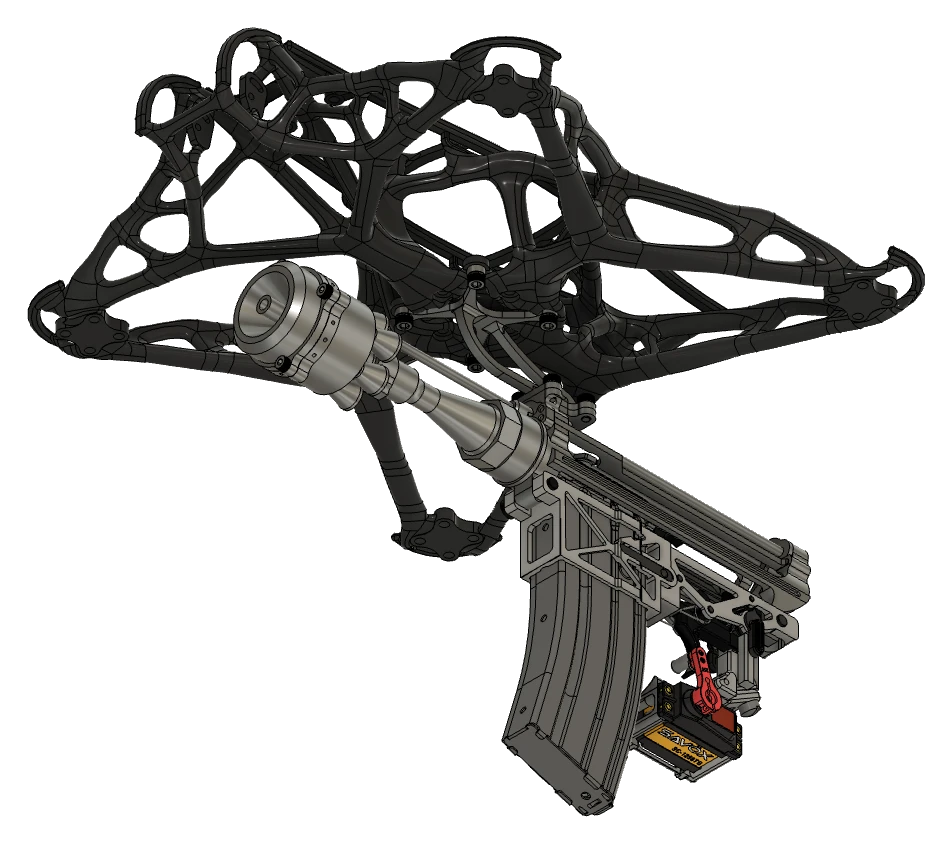
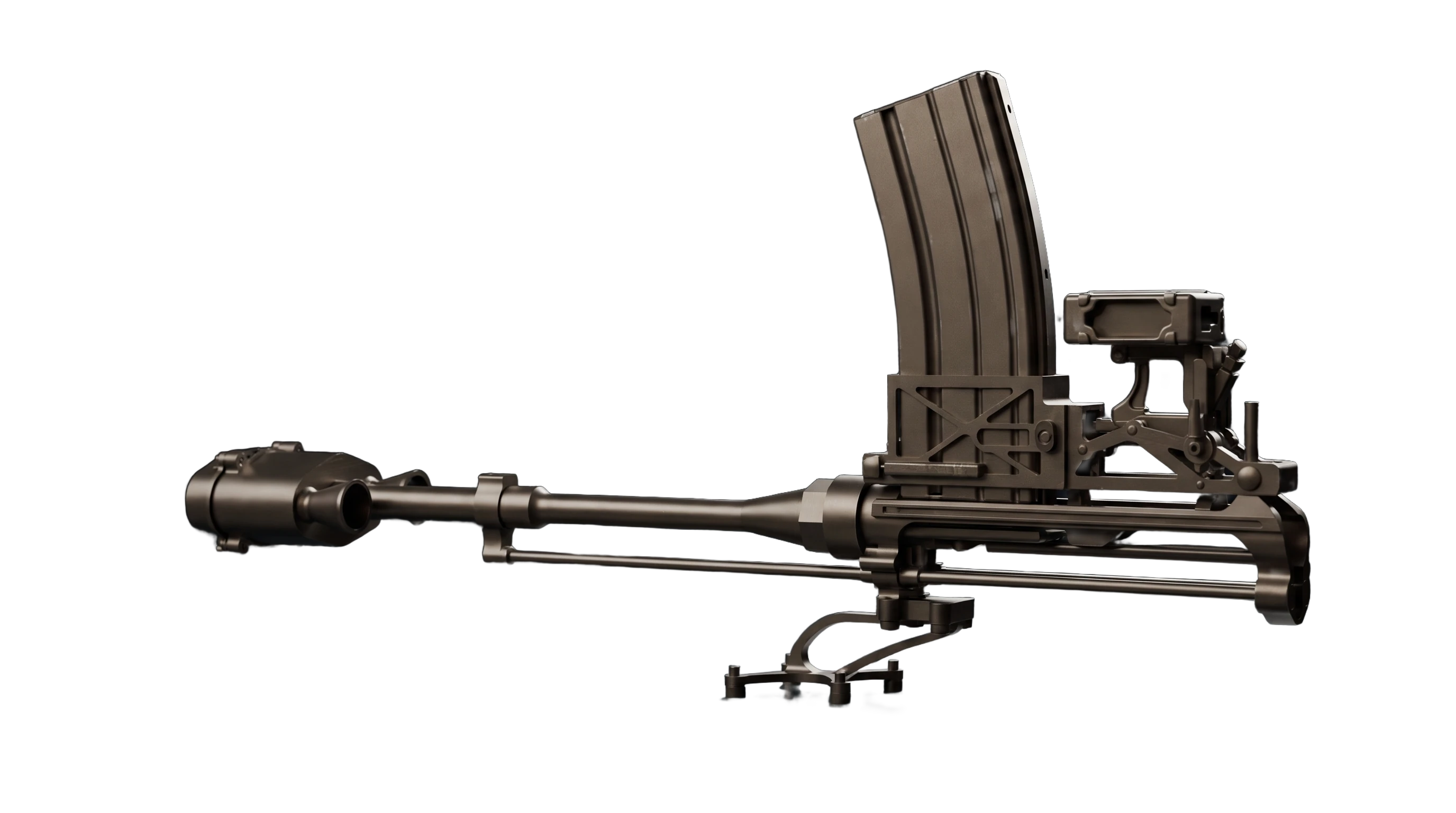
XDM on droneframe
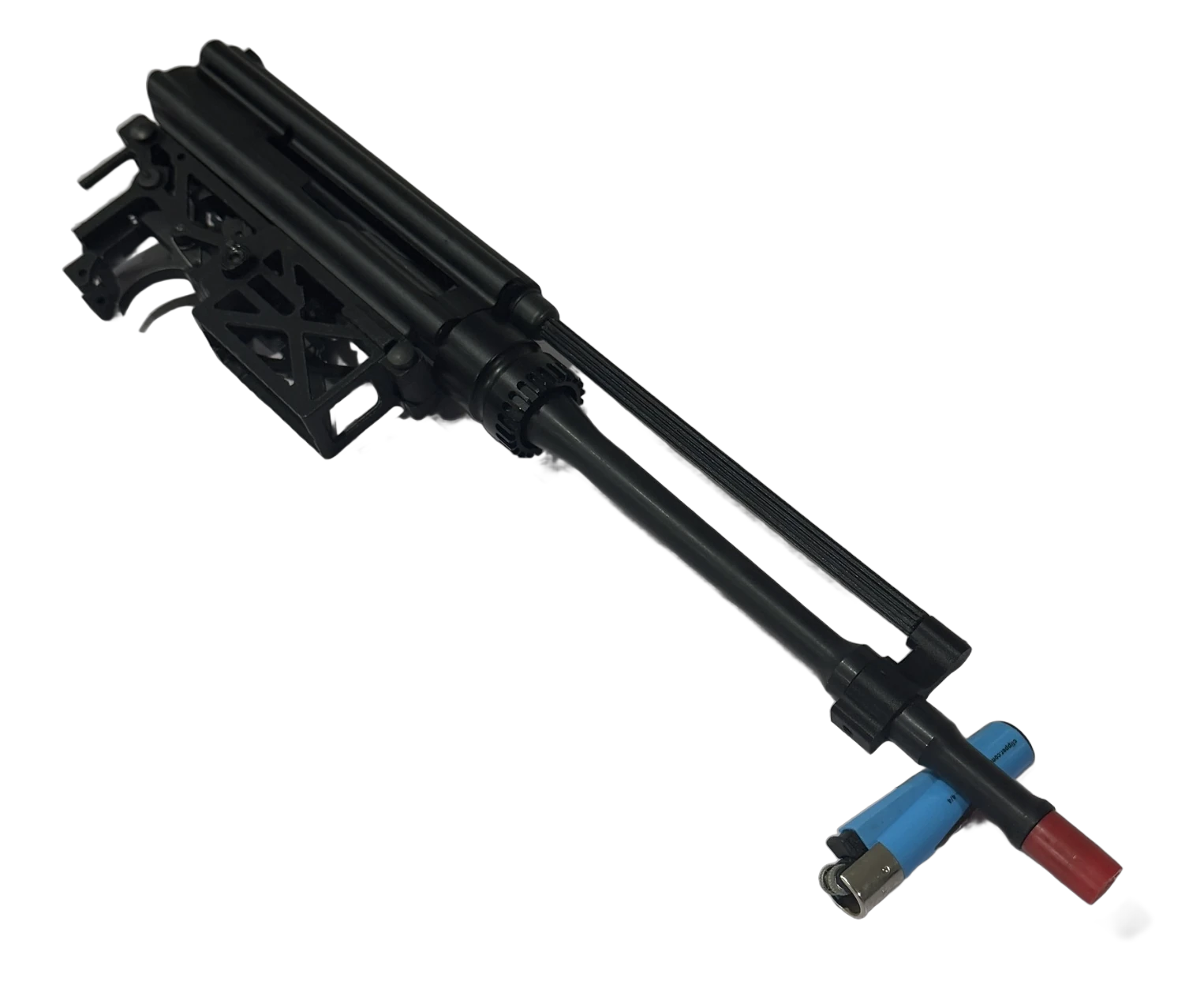
Pictured: XDM (X-Drone-Mongoose Firearm) on a standard droneframe, attached by means of a standard mounting bracket.

X-Gun · X-Drone-Mongoose

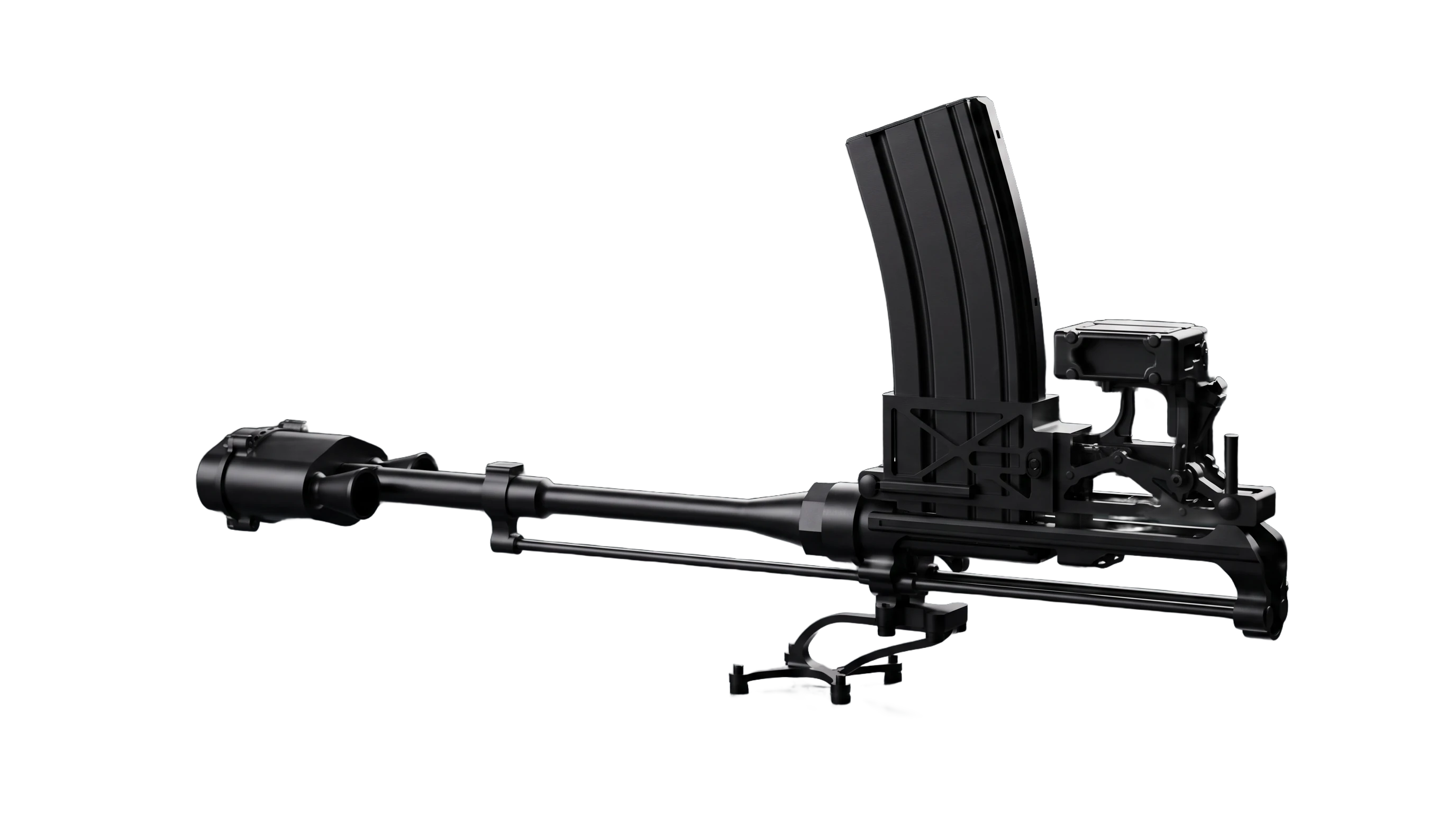
X-Drone-Mongoose redefined the interceptor.

  • Recoilless
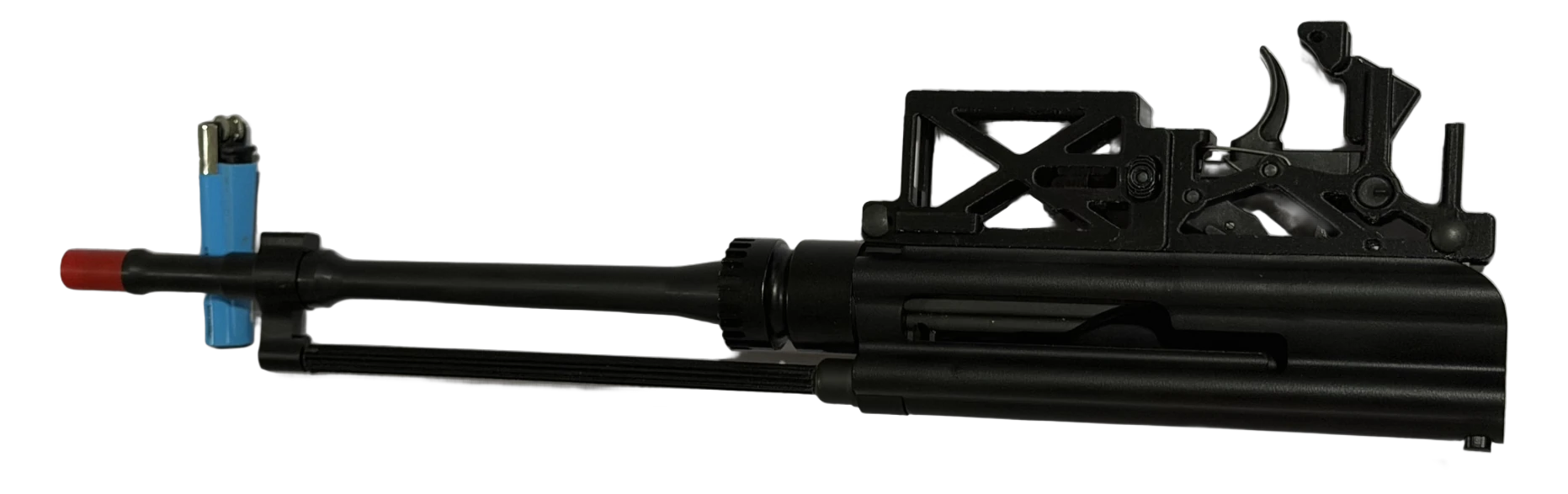
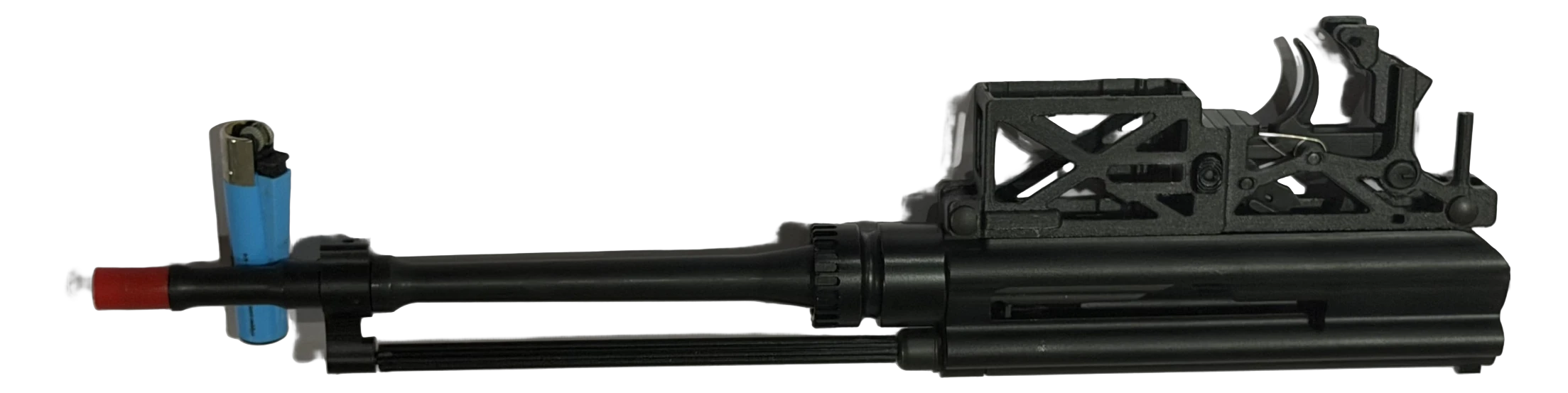
  • 397 g upper receiver assembly
  • ~1.2 kg complete assembly with 10.5" barrel
  • 356 mm OAL with 5.5" barrel
  • Electronically and/or autonomously controlled trigger
  • Compatible with standard, off-the-shelf AR-15 / M16 components and ammunition (5.56)
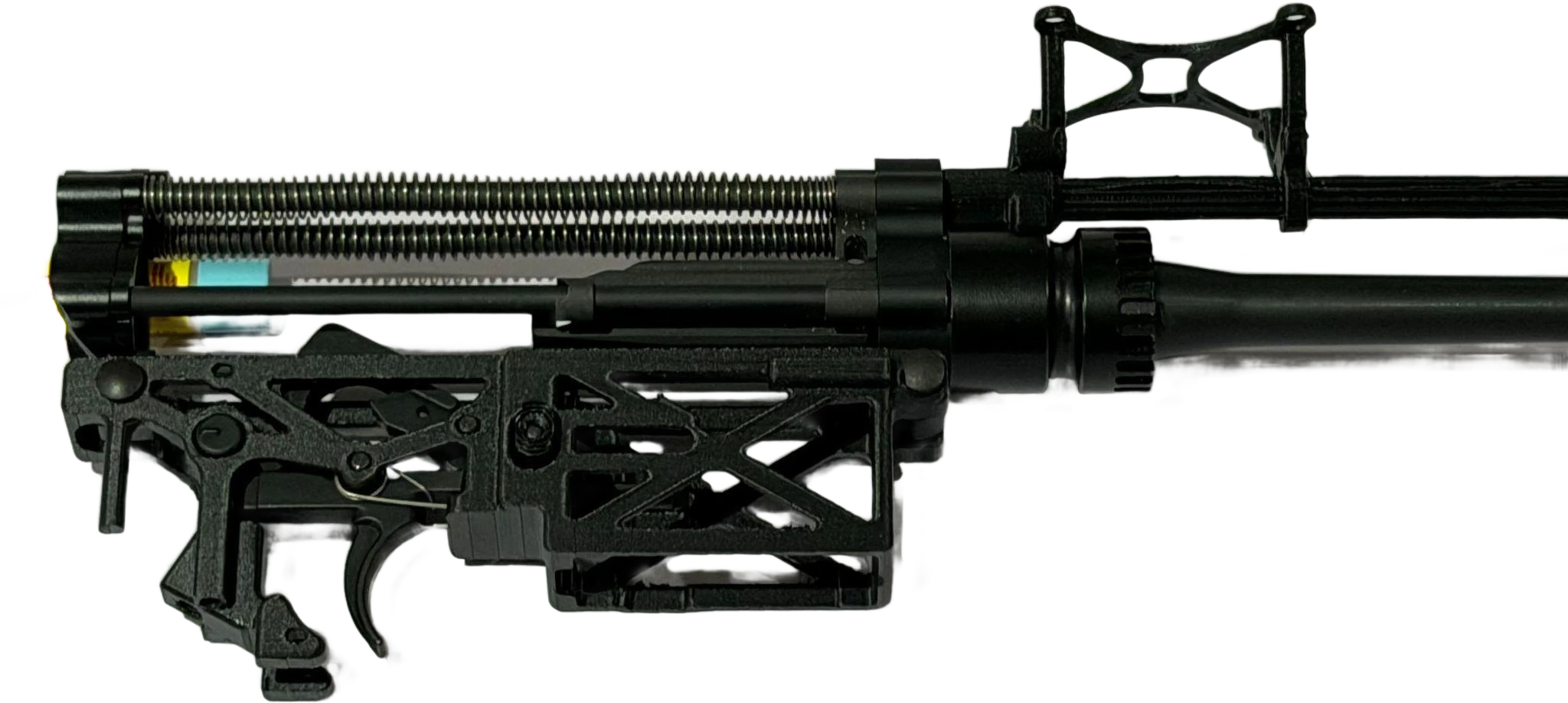
  • Hybrid piston operating system
  • Toolless, rapid assembly / disassembly
  • Minimal weight and profile, built for drone integration
  • Removable, non-reciprocating charging handle
  • Compatible with virtually any quadcopter or even high-speed airframes. A complete 5.56 weapon system purpose-built for UAS.

Every fielded interceptor drone today, from the $2,100 Ukrainian Sting to the $15,000 Merops, destroys itself to kill one target, and is basically the same racing airframe with a warhead or a net bolted on. An X-Gun, or XDM (X-Drone-Mongoose) armed interceptor drone engages the hostile drone with aimed fire and only needs to return for rearming. The airframe is not consumed. The sensors are not consumed. Ammunition is the only consumable.

X-Gun · ¾

Technical specs

Caliber
5.56 NATO · .300 BLK
Magazine
STANAG · 30-rd PMAG
Weight
~1.2 kg with 10.5" barrel
Upper receiver
397 g without barrel
Feeding
standard AR magazine well · belt fed (not shown)
Barrel
10.5", 16" or any standard AR-15 barrel
Operating system
hybrid piston
Fire
3 pos
Fire control
servo-actuated
Recoil
Recoilless, tunable, patent-pending
Lower receiver
any AR-15 / M4 / M16
Configurations
single/dual/triple · belly/inverted/integrated
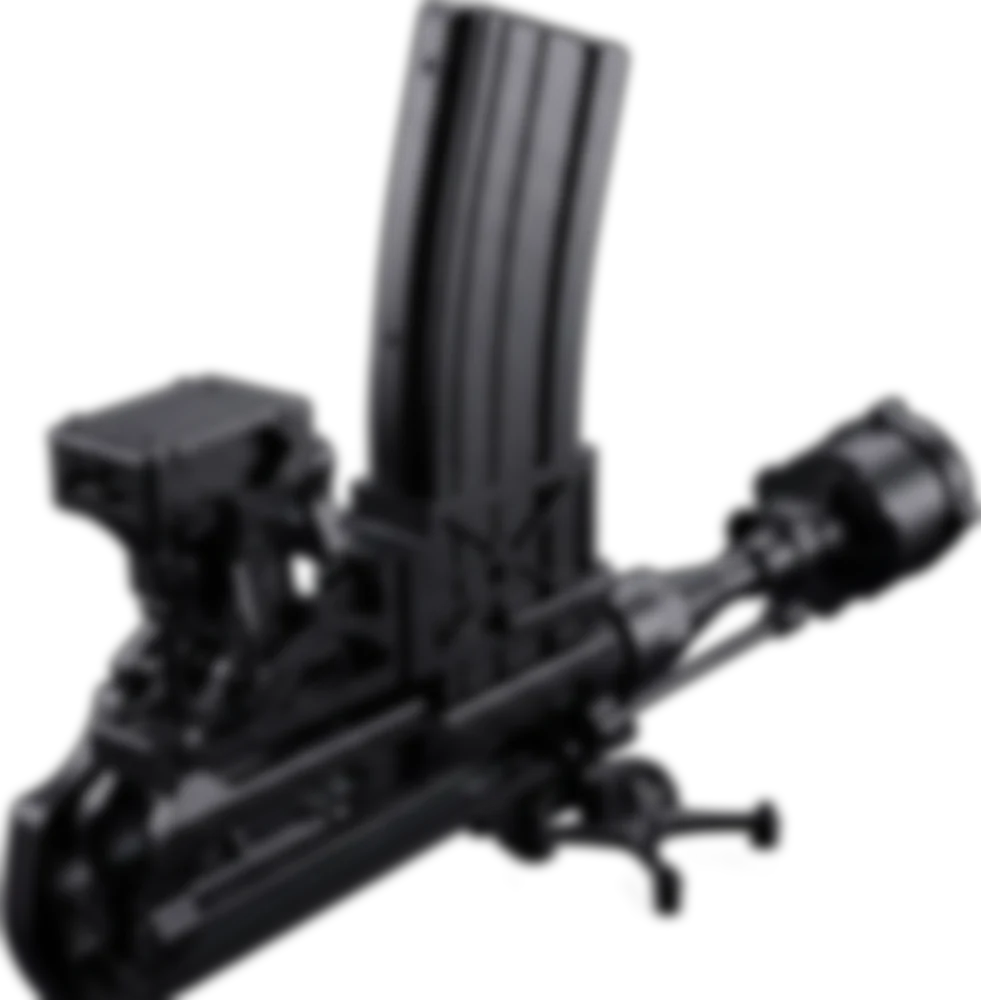
Three-quarter view · real hardwareType III black anodize · renderUpper + X-mount · real hardwareProduction prototype · real hardwareFull assembly with mount · real hardwareType III clear · render

Recoilless (Jet Deflection, Venturi, and Without Lost Velocity)

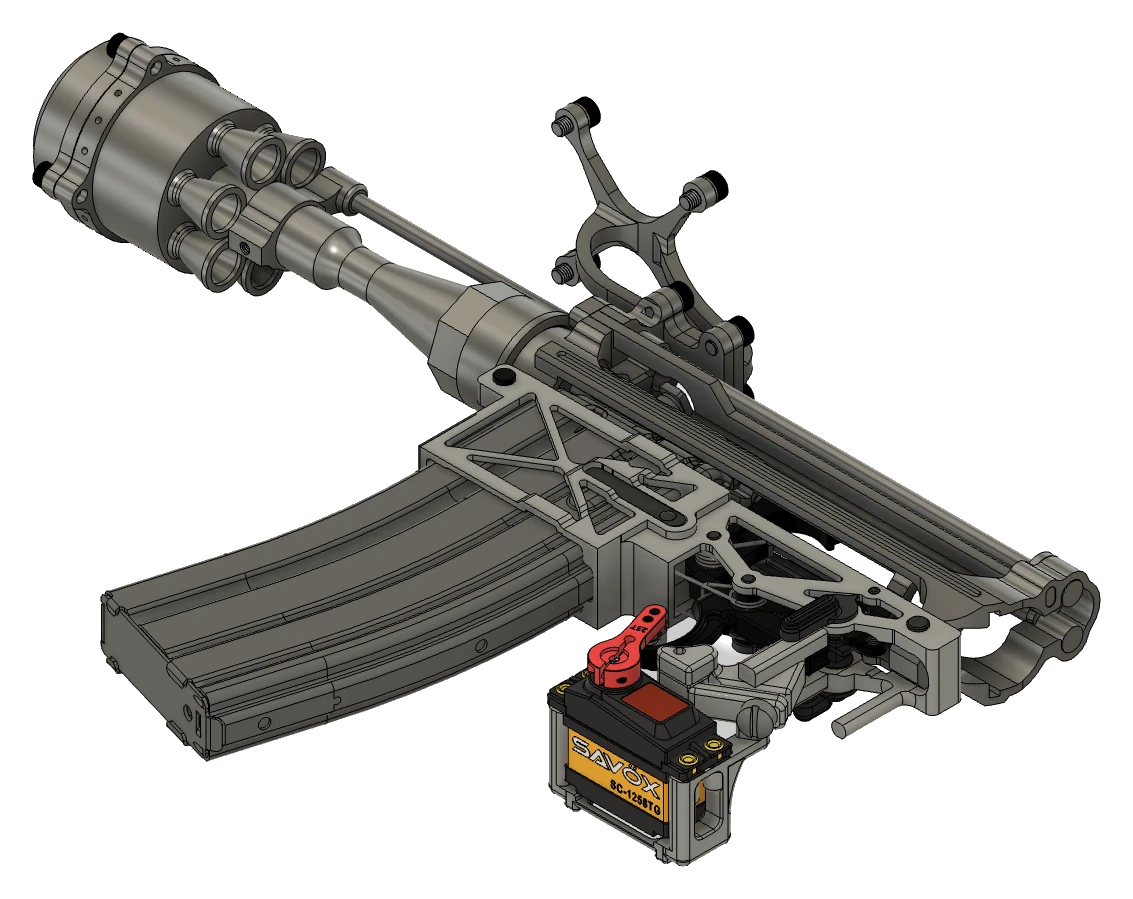
Adjustable jet-deflection muzzle device balances the forces of firing to a tunable zero recoil, which is what lets a full-power rifle cartridge fire from a lightweight flying platform without tearing it apart or throwing it off its line. Tunes the operating system to different ammunition and barrel configurations.

The lightened trigger group interfaces with the servo actuating mechanism for autonomous fire control, while staying compatible with any standard AR-15, M4, or M16 lower.

Sear servo · Savox SC-1258TG

Hunt and support, from one platform

Air-to-ground

Elevated thermal and visible sensors hold ground targets through smoke and foliage; a soldier hands a designation over the mesh.

Air-to-air

Hunts other drones, scanning wide to acquire and tracking narrow to engage the fast, small target ground fire struggles to touch.

The system

The Reckon counter-UAS system.

The Reckon counter-UAS system is an integrated, multi-layered defense architecture (soldier-carried optics, armed interceptor drones, and autonomous mounted weapons) combining passive multi-spectral detection, intelligent fire control, and networked coordination.

4detection layers
<0.3 secto detect
~1 kgX-Gun
Reusableinterceptor
5.56NATO
Reckon opticShrikeX-GunMounted stationLoki sentryTalon ISRhostile drone

A drone caught by any node is seen by all of them, and the track passes to whichever node is best placed to end it.

Forty-plus capabilities, one system

The optic

One sight that finds the drone, reads the wind, and finishes the shot.

One sight, 1x CQB to 10x

Close quarters and distance through the same line of sight. No offset dot, no head lift, no second optic.

Digital HUD overlay

Computed hold points, threat markers, wind data, and tactical information projected directly into the optical path.

Failsafe etched reticle

Glass-etched first focal plane reticle underneath the digital layer. Battery dead, it still shoots as a conventional scope.

On-weapon AI processor

A dedicated neural processing unit runs detection, classification, and tracking at the edge. No cloud, no latency, no external dependency.

Day and night thermal

Dual thermal cores and digital night vision see through darkness, smoke, dust, and foliage. No accessory to mount, no optic to swap.

Target amplification

AI finds and classifies targets the eye would miss, including small drones at range, and renders them on the display.

Reckon Shrike

A 1x non-magnifying variant purpose-built for counter-drone engagement. Camera-augmented targeting through the display is the primary interface.

Built-in training mode

The real optic runs simulated engagements, scores accuracy, detects flinch, and builds shooter profiles without live ammunition.

Available under NDA

Fire control

The machine solves and times the shot; the human authorizes it.

Ballistic fire control

Range, drop, drift, spin, Coriolis, air density, moving target lead, and cant solved in real time. You see the hold, not the math.

Self-read wind

Three independent measurement methods fuse into one confidence-weighted solution displayed as a zone of probability. No handheld meter.

Predictive fire timing

The shooter pulls the trigger. The system holds the sear and releases at the computed moment when hit probability on a moving target is highest.

Sub-millimeter aim correction

A servo-driven buttstock applies micro-corrections to weapon alignment, trimming natural wobble out of the hold before the shot breaks.

Self-correcting fire

After the round leaves, sensors observe where it went. The system computes the error, corrects the next solution, and shares the correction across the mesh.

Available under NDA

Detection

Four independent methods, so nothing evades all of them at once.

Four-layer detection

RF, acoustic, thermal, and AI-visual run simultaneously. A drone that evades one layer gets caught by another. First detection in under 0.3 seconds.

Unattended sentry

Mount the weapon on a robotic bipod and it watches a sector autonomously, detecting and classifying threats with no operator present.

Swarm defense

When multiple drones arrive simultaneously, the system ranks by threat, assigns targets across networked weapons, and coordinates the engagement.

Effect

Warning, dazzle, net, or round — the response fits the mission.

Soft-kill dazzle

A sustained laser pulse blinds the camera sensor on a drone, disabling guidance without firing a round. Eye-safe, zero ammunition cost.

Configurable effect

The same platform delivers kinetic, net-capture, or non-lethal payloads. The operator selects the effect before launch.

Graduated escalation

The system steps from visual warning through dazzle through disabling to lethal, each step gated by rules of engagement and documented in a tamper-proof log.

X-Gun interceptor

The reusable kinetic effector that flies home and rearms.

Reusable

Flies home and rearms for the next engagement. Not expendable, not single-use.

Under 1 kg, 5.56 NATO

Complete weapon system weighs roughly one kilogram. Fires standard NATO ammunition from standard magazines.

Recoilless operation

Tunable jet-deflection eliminates recoil forces that would destabilize the airframe or mount.

Servo and electronic fire control

Sear and trigger are electronically actuated. The fire control computer times the shot.

Single, dual, or triple

One, two, or three barrels in a converging pattern for maximum hit probability at the computed intercept range.

Belly, inverted, or integrated mount

Mounts below, above, or inside the airframe depending on the platform and mission.

Anti-personnel and suppressive fire

Not limited to counter-drone. Delivers accurate fire on ground targets from an unmanned platform.

AR-15 / M16 compatible

Uses standard bolt, barrel, and ammunition. No proprietary cartridge, no custom logistics chain.

Available under NDA

Network

One encrypted mesh — what one node sees, every node sees.

Encrypted squad mesh

Every optic shares sensor data over encrypted radio. What one sees, all see. Sub-200 ms propagation across the mesh.

Target handoff

One optic locks a target and passes coordinates, classification, and a computed firing solution to the optic with the best shot.

IFF and blue-force

Friendly positions marked on the display alongside threats. Encrypted beacon identification prevents engagement of friendly forces.

ATAK / TAK integration

Detection, position, and engagement data feed directly into standard tactical awareness applications used by the broader force.

Swarm coordination

Networked optics divide a swarm among themselves. Each takes assigned targets without duplication or gaps in coverage.

The Reckon Matrix

Loki, Talon, Max, Solid Eye, Shrike, and every ecosystem device connects through one protocol. Reckon is the hub.

Autonomy and scale

Set the machine's authority; field it on any platform.

Configurable autonomy

The operator sets exactly how much authority the system has, from full manual to AI-assisted, documented and auditable.

Full manual override, always

At any automation level, one input returns complete manual control instantly. The machine never overrides the operator.

Soldier, vehicle, and fixed-site

The same core intelligence runs on a handheld optic, a vehicle weapon station, or a permanent defensive installation.

Airborne interceptor

Purpose-built for drone-mounted engagement of aerial threats, with fire control adapted for flight dynamics.

Homeland and infrastructure

Scaled for static defense of borders, airfields, power stations, and critical sites.

Available under NDA

Built for the field

Rugged, survivable, sovereign, and built to grow.

Graceful degradation

GPS jammed and mesh down, the system falls back through inertial navigation, visual odometry, and stored data. A cut-off node still fights.

Ruggedized to field standards

Machined from aerospace-grade billet aluminum, sealed against submersion, rated for extreme temperatures, and built to survive sustained recoil.

Extensible

New sensor, effect, or ammunition modules plug into standardized interfaces. Future capability added without redesigning the optic.

Sovereign

Designed and manufactured entirely outside US export jurisdiction. No ITAR dependency.

In-country licensed production

Partner nations manufacture under license on their own soil. No supply chain held hostage by a foreign government.

Concept to prototype in under a month

From whiteboard to working hardware in weeks. Rapid iteration across the full design, firmware, and integration pipeline.

The wind

Nobody has solved wind. Reckon does.

optictarget
  • Local anemometerwind at the muzzle
  • Squad meshsampled downrange, along the path
  • Shot telemetrywhere rounds actually land
  • Mirage · CMOScrosswind read from the glass
  • fusedcertainty rises as the sources agree

Reckon fuses these independent sources by how certain each one is (inverse-variance weighting), so it measures the wind acting on the shot across the distance to the target, not only at the muzzle — the one input a firing computer has always had to ask a human for.

Detection

Several independent drone detection methods, overlapping so none can be spoofed alone.

  • RF / ELINTcontrol + video links
  • Radar · micro-Dopplerrotor signature
  • Electro-opticalAI vision, 30+ fps
  • Acousticpropeller sound
  • Infrared / thermalheat through smoke
  • Passive RF · direction-findingemitter geolocation
  • <0.3s to first track

Each method runs on its own physics, so a countermeasure that defeats one — jamming a link, masking a signature, hiding from a camera — still surfaces on the others. The optic and the mesh fuse the methods that fire into a single, confident track, and more modalities can be added as the threat evolves.

Fire timing

Sub-millimeter actuators in the stock correct weapon aim while the operator holds steady, reducing the engagement task from impossible to a trigger pull.

0255075100060120180P(hit) %hold time (ms)trigger pulledsear releases · 85%

The stock contains a fixed operator interface: a buttpad and integral cheekweld that remain stationary against the operator’s shoulder and face. Between this fixed cradle and the weapon body is an actuated translation stage that moves the weapon in two axes. The operator’s shoulder serves as a fulcrum. Corrections are sub-millimeter and imperceptible. The operator’s head, eye, and cheek remain stationary. Sight picture and eye relief are preserved throughout the correction process.

Configurable autonomy

The same physical installation supports fully autonomous through fully human-controlled engagement, with the autonomy level configurable to the buyer’s doctrine.

The same station supports fully autonomous engagement, supervised autonomy where the system detects and tracks while a human authorizes fire, near-manual control where the human targets and the system handles final aim, and a full manual override at any level.

The autonomy level is a commissioning parameter set to the buyer’s rules, which lets one design satisfy a cautious rules-of-engagement doctrine and an air-defense-of-last-resort posture without changing the hardware.

Full Manual Override

Complete manual control.
Always available at any autonomy level.

Because authority is configured rather than fixed, the same weapon ships to a homeland-security customer who wants a human on every trigger and to a force that pre-authorizes autonomous engagement of declared hostiles — and it can be moved between those settings as the mission and the rules of engagement change.

Unattended sentry

Left on a tripod, the system watches an empty sector for days on minimal power and wakes the squad the moment a drone crosses the threshold, transitioning to full engagement readiness in under three seconds.

Swarm defense

A swarm is designed to saturate a single shooter, so the system holds every track at once and ranks them by threat, and the network works the highest threat first instead of losing the picture to the crowd.

Distributed coordination

Nodes split a mass attack between them, the system assigning targets to the weapons best placed by geometry and readiness, so no single shooter is saturated.

Soldier carried

The Reckon optic and the 1x Reckon Shrike give every equipped soldier organic detection, target amplification, and autonomous fire timing, which turns each soldier into a counter-drone node with no dedicated air-defense asset.

Airborne interceptor

X-Gun interceptors engage and destroy hostile drones in the air and return to rearm, in single, dual, and triple configurations, on a reusable platform where ammunition is the only consumable.

Mounted and fixed site

Vehicle, turret, and fixed installations use cameras and sensors to detect, classify, track, and engage, protecting the crew and configurable from fully autonomous to fully human-controlled.

Vehicle and armored-platform protection

Vehicle- and armor-mounted anti-drone weapons provide continuous 360-degree aerial defense independent of the primary weapon systems, addressing the threat destroying armored platforms worldwide.

Turret-mounted or remote-weapon-station-integrated weapons protect vehicles from FPV drone attack during movement and at halt. Continuous 360-degree aerial surveillance, automatic detection and classification of inbound drones, and computed engagement with autonomous fire timing.

Vehicle crew are protected without needing to expose themselves.

Infrastructure and fixed-site defense

Fixed-site installations scan for days on minimal power and transition to full engagement in under three seconds, protecting infrastructure worth thousands of times the cost of the defensive installation.

Permanent or semi-permanent weapon installations protect guard posts, command centers, power generation, communications infrastructure, logistics depots, airfields, and forward operating bases. Installations operate in ultra-low-power surveillance mode for days to weeks, and on detecting a classified threat the system transitions to full engagement capability in under three seconds.

For critical infrastructure where a single drone can inflict damage far exceeding the cost of the defensive installation, the economics are unambiguous. A mounted weapon station protecting a $5 million radar installation or a $50 million fuel depot pays for itself on the first intercept it prevents.

Scalable deployment

From a single guard post to a coordinated network of dozens, all nodes share detection data on the mesh, so more nodes mean better detection, coordination, and accuracy.

Anti-personnel and suppressive fire

Every mounted installation is inherently dual-purpose — anti-drone and anti-personnel from the same platform. Enhanced 5.56 NATO defeats modern body armor, so one installation serves both missions.

Configurable autonomy

One physical installation serves any point on the autonomy spectrum, so the buyer sets the level of machine authority to their own doctrine, and full manual override is always present.

The same station supports fully autonomous engagement, supervised autonomy where the system detects and tracks while a human authorizes fire, near-manual control where the human targets and the system handles final aim, and a full manual override at any level.

The autonomy level is a commissioning parameter set to the buyer's rules, which lets one design satisfy a cautious rules-of-engagement doctrine and an air-defense-of-last-resort posture without changing the hardware.

Homeland and critical-infrastructure protection

The same mounted stations and interceptors that protect a convoy protect a stadium, an airport, or a border crossing, because a hostile drone over a crowd is as dangerous as one over a column.

A drone carrying a payload is a threat wherever it flies, and a civilian site adds the constraint that a missed kinetic round or a drone falling out of the sky is unacceptable over a crowd, while broad jamming knocks out the communications the venue itself depends on.

Fixed installations and airborne interceptors both use the detection and targeting described throughout this system, so a police department or a National Guard unit gains the same acquire, track, and computed-engagement capability a military force has, tuned to the rules of a populated area, and the net loadout takes a drone down intact over the crowd it threatened.

The ecosystem

Every asset on the network makes every other asset more accurate, so capability compounds as a force adds nodes instead of thinning as it spreads out.

Every Reckon asset, from a soldier's optic to an interceptor drone to a mounted station, communicates on one encrypted mesh, feeds one shared picture, and coordinates through one protocol. A drone detected on any layer propagates across the mesh instantly, a track passes from the node that found it to the node best placed to end it, friendly forces are marked on the same picture that marks the threat, and the whole picture drops into the tactical network the force already runs.

Reckon

full-spectrum intelligent optic, 1–10x variable magnification

Reckon Shrike

1x non-magnifying dedicated counter-drone optic

X-Gun

armed drone weapon, reusable interceptor platform

Loki

robotic smart bipod, remotely operated sentry

Solid Eye

wearable monocle display, remote situational awareness

Talon / Kestrel

personal ISR drones, persistent surveillance

We take prime contracts, custom orders, and clean-sheet projects for sovereign buyers and their program offices.

Write to us and a founder responds.

Contactjonathan.blecher18@gmail.com

About →

Other WorkBlecher LLCVeracity EngineForgeBrashZeroInference RelayCorso Kineticblecher.ai